

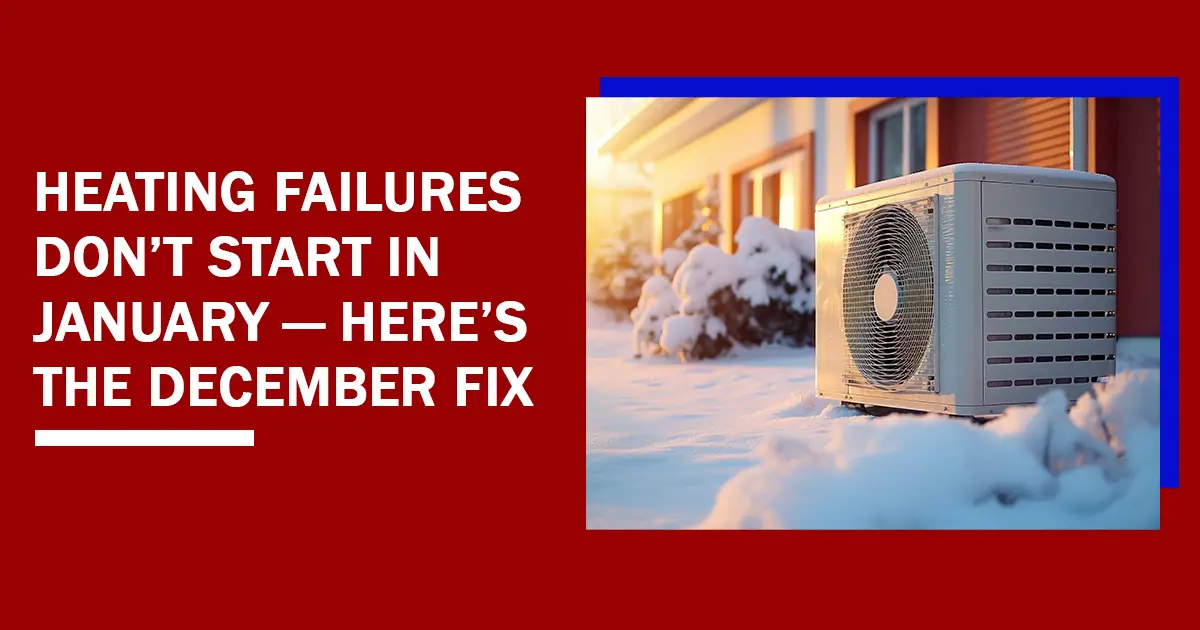
December is one of the best months to think ahead for your home’s comfort system. Cold weather is settling in,
families are spending more time indoors, and many homeowners finally have time to address lingering maintenance
issues before the new year begins.
In our experience, the most expensive HVAC failures in January don’t happen because systems were old — they
happen because early warning signs were ignored during December.
This guide walks you through exactly what to evaluate right now, how to avoid emergency breakdowns, and how to
decide whether your system should be serviced, repaired, or replaced before winter demand peaks.
Why December Is the Smartest Month for HVAC Planning
Once winter hits full force, service schedules tighten, parts availability can slow, and emergency calls become
more expensive. Homeowners who plan in December benefit from:
- Lower emergency repair risk
- Better appointment availability
- Improved energy efficiency during peak usage months
- Fewer complete system failures in January and February
Whether your home uses a traditional furnace, heat pump, or ductless system, seasonal evaluation is the
difference between predictable comfort and surprise outages.
Immediate 6-Step Winter HVAC Check You Can Do Today
Before calling for service, every homeowner should complete these quick checks. They reveal over 60% of common
winter HVAC problems:
-
Replace your air filter — A clogged filter causes airflow restriction and system
overheating. -
Test your thermostat accuracy — If room temperature doesn’t match the reading, efficiency
drops. - Listen for new sounds — Clicking, grinding, or vibrating are mechanical warning signs.
- Check vents for blockage — Furniture and rugs reduce system airflow.
- Inspect outdoor units — Heat pumps and AC units must remain clear of ice and debris.
- Watch for uneven heating — One cold room often signals duct or blower issues.
If any of these checks raise concerns, professional evaluation through a
heating service inspection
can identify problems before they escalate.
Understanding Your Heating System Type (Furnace vs Heat Pump vs Ductless)
Most Union, MO homes use one of three heating configurations:
-
Gas or electric furnaces — Reliable, powerful, but component wear is common after 10–12
years. -
Heat pump systems — Highly energy efficient in moderate cold, but require seasonal
calibration. -
Ductless mini-splits — Excellent zoning control and efficiency, but sensitive to airflow
obstructions.
If you are unsure which system best fits your home long-term, comparing
heat pumps vs traditional air conditioners
is an excellent starting point when considering future upgrades.
When to Schedule Repairs vs When to Plan Replacement
A common mistake homeowners make is repeatedly repairing systems that are already at the end of their lifespan.
Here is a simple decision guide we use:
- If the system is under 10 years old: Repair usually makes financial sense.
- If the system is over 12–15 years old: Replacement becomes the safer long-term investment.
- If repair costs exceed 40% of replacement: Replacement prevents repeat breakdowns.
If you are facing recurring furnace issues, reviewing options for
heating replacement
before peak season avoids emergency installs later.
Heat Pump Owners: What You Should Address Before Deep Winter
Heat pumps operate year-round and shift modes seasonally. Winter failures often stem from:
- Incorrect refrigerant levels
- Defrost cycle failures
- Outdoor unit icing from restricted drainage
Preventative inspections through
heat pump services in Union, MO
drastically reduce mid-winter shutdown risk.
Indoor Air Quality Matters More in Winter Than Any Other Season
Windows stay closed, humidity levels shift, dust builds up faster, and airflow recirculates endlessly. Poor
indoor air quality affects:
- Asthma and allergy symptoms
- Sleep quality
- Dry skin and sinus irritation
- System efficiency
Professional evaluation through
indoor air quality specialists
can dramatically improve winter air comfort while reducing strain on your HVAC equipment.
Sheet Metal & Ductwork: The Hidden Source of Heat Loss
Many heating complaints are not equipment failures at all — they result from duct leakage or airflow
restriction. Lakebrink’s in-house
sheet metal fabrication services
allow for custom duct improvements that restore balanced airflow.
This is especially important for older homes and multi-level properties.
Should You Consider a System Upgrade Before the New Year?
December is one of the smartest upgrade periods because:
- Contractor schedules are still flexible
- Installation allows immediate winter efficiency testing
- Homeowners can plan financially before January expenses
High-efficiency options such as the
Daikin Fit System
or
geothermal systems
can reduce long-term utility costs while improving comfort consistency.
How Preventive Maintenance Saves You the Most Money
Routine inspections performed through
preventive maintenance programs
reduce emergency breakdown risk by addressing:
- Combustion safety issues
- Worn motors and bearings
- Thermostat calibration problems
- Airflow and static pressure imbalance
Financing & Planning Comfort Without Financial Strain
Major system upgrades don’t have to disrupt household budgets. Many homeowners now utilize HVAC
financing options
to:
- Upgrade immediately without depleting savings
- Lock in current pricing before seasonal demand spikes
- Spread comfort investment over manageable payments
Final December HVAC Checklist for Homeowners
- Replace air filters
- Verify thermostat accuracy
- Schedule heating inspection
- Clear outdoor airflow obstructions
- Address indoor air quality concerns
- Evaluate long-term replacement plans
Homes that complete these six steps in December experience far fewer winter emergency calls.
Planning for a Comfortable New Year Starts Right Now
If you want predictable comfort, lower energy bills, and fewer surprise repairs in 2026, December is the month
to invest a little time into your HVAC system.
Whether that means scheduling a tune-up, planning an upgrade, improving duct efficiency, or addressing indoor
air quality, preparation now creates a far smoother winter ahead.